
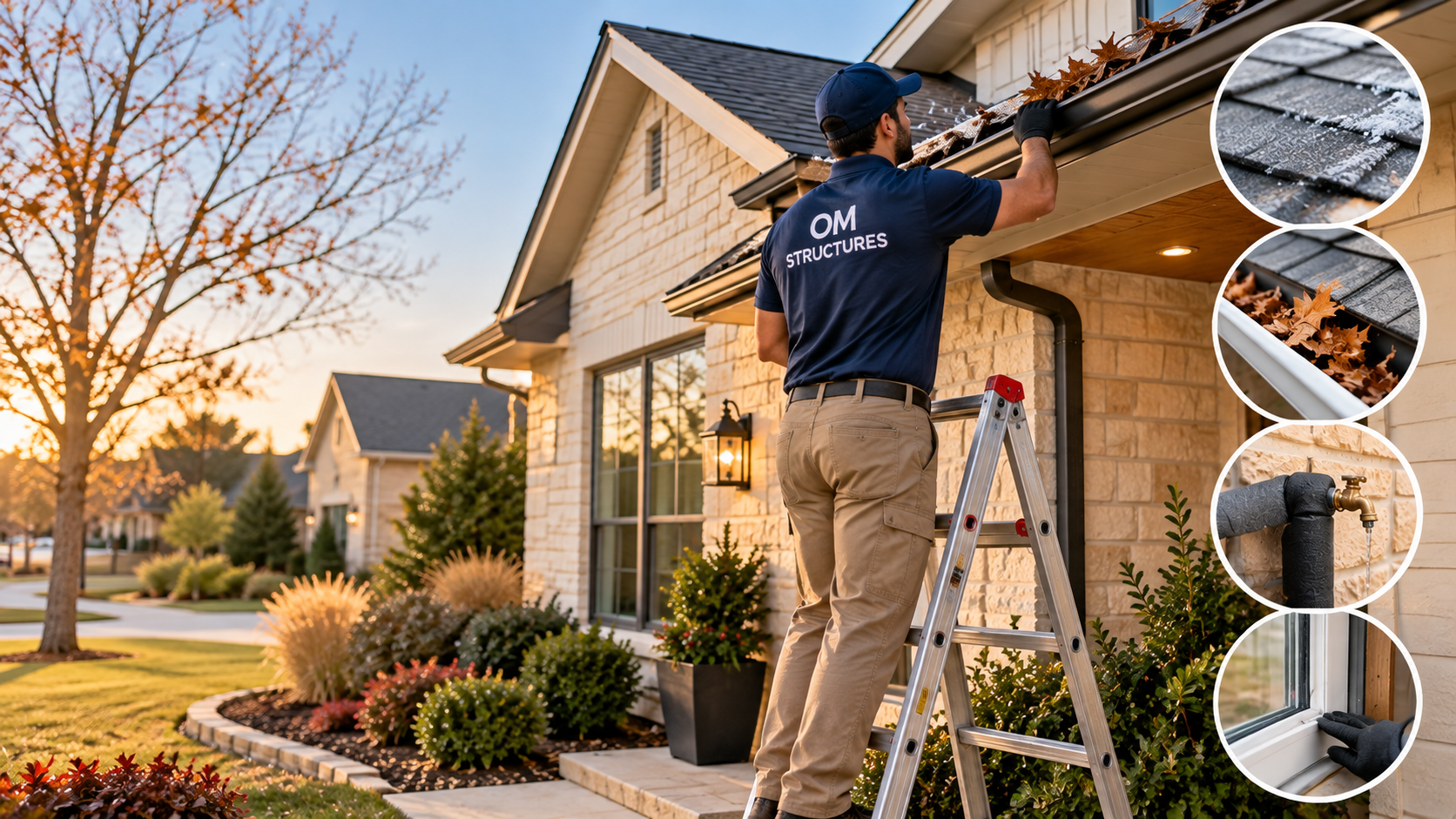
Texas winters may be milder than those in many other parts of the country, but changing temperatures, strong winds, heavy rain, and occasional freezing conditions can still affect your home's exterior. From damaged fences and clogged gutters to cracked caulking and poor drainage, small maintenance issues can become expensive repairs if they are ignored.
For homeowners in Central Texas, preparing a property before colder weather arrives is an important part of maintaining its appearance, durability, and value. A little attention in the fall can help prevent weather-related damage and keep your home in better condition throughout winter.
Here are some practical ways to protect your home's exterior from Texas winter weather.
1. Inspect Your Roof Before Winter Arrives
Your roof is one of the first lines of defense against rain, wind, and cold weather. Missing shingles, damaged flashing, loose roofing materials, and worn seals around vents can allow water to enter your home during storms.
Before winter, inspect your roof from the ground for visible signs of damage. Look for missing shingles, sagging areas, or debris that may have accumulated after strong winds. If you notice possible damage, arrange for a qualified roofing professional to inspect the area.
Avoid climbing onto a wet or steep roof yourself. Professional inspections are a safer way to identify problems that may not be visible from the ground.
Addressing roof issues early can help reduce the risk of leaks, interior water damage, and more extensive repairs during the colder months.
2. Clean Gutters and Check Downspouts
Gutters play an important role in directing rainwater away from your home's roof, walls, and foundation. When leaves, dirt, and other debris block the system, water may overflow and collect near the house.
Clean your gutters before the winter rainy season and check that downspouts carry water away from the foundation. Make sure the connections are secure and that water does not discharge into areas where it can cause erosion or pooling.
If you notice persistent overflow, loose gutters, or damaged downspouts, repair them before the next major storm.
Proper drainage helps protect exterior walls, landscaping, and the areas surrounding your foundation. It also reduces the chance of standing water creating additional maintenance problems.
3. Seal Gaps Around Windows and Doors
Small gaps around windows, exterior doors, and other openings can allow drafts and moisture to enter your home. Over time, deteriorating caulk and worn weatherstripping may reduce comfort and contribute to moisture-related damage.
Check the caulking around window frames, door frames, trim, and other exterior joints. Look for cracks, peeling sealant, or visible gaps. Replace damaged caulk with a product suitable for the material and application.
Inspect door weatherstripping as well, particularly if you notice cold air entering around the edges.
Sealing appropriate gaps can help improve energy efficiency and limit unwanted moisture intrusion. However, avoid sealing drainage openings or other areas designed to allow water to escape.
4. Protect Your Siding and Exterior Paint
Your home's siding and exterior paint face constant exposure to sunlight, rain, wind, and temperature changes. Damaged paint, loose siding, and deteriorated trim can leave underlying materials more vulnerable to moisture.
Walk around your property and look for peeling paint, cracked trim, loose siding panels, and areas where water appears to collect. Pay particular attention to corners, joints, and places where different materials meet.
Small paint failures may be repairable with proper surface preparation and suitable exterior paint. Larger areas of deterioration may require professional repairs before repainting.
For homes with wood siding or trim, addressing exposed surfaces promptly is especially important. Regular maintenance helps preserve the exterior finish and can reduce the need for more extensive repairs later.
5. Check Fences, Decks, and Outdoor Structures
Fences, decks, pergolas, and other outdoor structures can be affected by strong winds, rain, and occasional freezing temperatures. Loose fence posts, damaged boards, exposed fasteners, and deteriorating finishes should be addressed before winter storms arrive.
Inspect fence posts for movement and check boards for cracks, rot, or loose connections. Look for raised deck boards, unstable railings, and damaged structural components.
Wooden fences and decks may benefit from appropriate sealing or staining, depending on their condition and the product manufacturer's recommendations. Make sure surfaces are properly prepared and dry before applying protective finishes.
Pergolas and other outdoor structures should also be checked for loose connections and signs of damage. If a structure appears unstable, arrange for a professional assessment rather than attempting an unsafe repair.
6. Improve Drainage Around Your Property
Heavy rain can expose drainage problems that are less noticeable during dry weather. Water pooling near your home may damage landscaping, erode soil, and contribute to moisture problems around the foundation.
Check your yard after rainfall to see where water collects. Look for low spots, eroded garden beds, blocked drainage channels, and areas where downspouts release water too close to the house.
Depending on the property, improvements may include adjusting landscape grading, extending downspouts, installing suitable drainage systems, or redesigning garden beds to improve water movement.
Drainage solutions should direct water safely away from the house and neighboring properties. Persistent water accumulation or signs of foundation movement may require evaluation by a qualified professional.
7. Prepare Your Landscaping for Cold Weather
Landscaping also needs attention before winter. Although many Central Texas plants tolerate seasonal temperature changes, occasional freezes can damage sensitive plants, containers, and irrigation components.
Remove fallen leaves and dead plant material where necessary, maintain garden beds, and protect sensitive plants according to their needs. Avoid excessive pruning or fertilization without considering the plant species and season.
Inspect irrigation systems for leaks and follow appropriate winter precautions, especially when freezing temperatures are forecast. Disconnect or protect exposed components according to the manufacturer's instructions.
Well-maintained landscaping can also support better drainage and help keep outdoor areas tidy throughout winter.
Protect Your Home With Seasonal Exterior Maintenance
Preparing your home for Texas winter weather does not always require major renovations. Cleaning gutters, inspecting exterior surfaces, sealing appropriate gaps, maintaining fences, and correcting drainage issues can make a meaningful difference.
For homeowners planning larger improvements, professional exterior renovation and landscaping services can help address problems before they become more difficult to manage.
OM Structures provides home improvement, exterior renovation, and landscaping services for homeowners throughout Central Texas. Whether you are considering fence improvements, outdoor living upgrades, or landscaping and drainage enhancements, choosing the right improvements can help maintain your property's appearance and functionality.
Visit OM Structures to explore available services and discuss your next home improvement project.
With regular inspections and timely maintenance, you can help your home withstand seasonal weather changes and remain in good condition for years to come.